

The Difference Between Talking Zen and Living It
How do we safeguard what matters most?
What a glorious winter. A day or two ago, I got a message saying, “I’m not sure if I’ll be able to come to the Zendo, depending on the snow.” And I said, “I’m 100% sure I will be there.”
There’s something in that exchange that points to what I want to explore today. How we make excuses. How we differ to outer circumstance as an excuse for showing up. How we argue with reality. How we create separation between what we say we value and what we actually do.
Shunryu Suzuki Roshi taught that “no teaching could be more direct than just sit.” How is directness going for you? Ever make things complicated? Fight with yourself and others in your mind, or rationalize, or say, ‘Oh, I’m not doing a good job, and so I’m bad’?
When we entertain these thoughts, we become ghosts caught in our own stories. We stop existing here. We stop being Buddha.
This past week, we started studying Dogen Zenji’s teachings on the transmission of the dharma robe, the difference between correct transmission and everything else that merely looks like Zen and yet lacks embodied, intimate experience. There is such a big difference between being truly receptive and what could be called being politely endorsing. I feel this is something we all have experienced.
Learning how to actually receive teaching is a form of trust, a practice of intimacy. How can we just receive teachings and experience them, instead of hearing a teaching and deciding with our brains whether we like it or agree with it?
Dogen traces the Soto Zen lineage of transmission carefully, twenty eight generations in India, passed person to person, and then six generations in China. How is this important? Who cares?
It is moving to me because transmission is not abstract. It is verified, embodied, caring, and continuous. And if one link in the line breaks, it all breaks down.
Correct transmission happens quietly, deeply, and personally. Not for seeking fame and position.
Huineng, our sixth ancestor, received the transmission of the robe from his teacher in the middle of the night, in the dark. It was not prestigious. There was not a lot of fanfare. His teacher felt that so many people in the Sangha studied and talked about the dharma, but few embodied it.
For Dogen, this is a disaster. Transmission is not about parroting the teachings. It is not just taking on a certain role or memorizing sutras.
It is easy to use Zen as an identity rather than vow to embody it everyday. Easy to talk Zen. It’s a different thing to live it.
Safeguarding what is most important is a place of practice.
I do not know how many of you watched the killing of the nurse in Minneapolis. I found it excruciating. An emergency room nurse.
How do we not lose our humanity? How do we not demonize others and realize how we are all responsible? How do we see this terrible brutality and not split the world in two? Into us and them?
To the man who was killed and to the people who killed him, who are they? What leads someone to do that? How do we safeguard the teachings throughout our life with rigorous care and protection?
To me, safeguarding the tradition means making sure that even in these terrible moments, we’re not losing compassion, wisdom, love, and connection.
Neglect of our practice leads to the dilution of practice. When practice sometimes, when it’s convenient, practice becomes a little superficial and confused about what lineage is.
Dogen’s greatest fear was not conflict. He lived within tons of conflict. What he feared most was the erosion of grounded practice. Me too. He teaches that the Dharma does not usually disappear suddenly. It fades slowly when no one safeguards it with their life.
We appreciate the lineage because those are the people who gave their lives to the practice. Most of us won’t do that, and yet we can consider just how important it is to support the people who do.
It really requires responsibility. To maintain the Dharma is to say I am responsible. We can all ask ourselves: what is my way? Whether we are a person who says, ‘I will guard it with my life and put the Three Treasures at the center of my life,’ or ‘I am participating in supporting those people and places that maintain the Dharma.’
Dogen is talking about a guardianship program. To receive the Dharma is to be responsible for the future. Not your future. The future of Dharma itself.
Let’s practice together.
How do we practice continuously? Live the precepts? Safeguard the teachings? How can we actually train and support successors with humility and rigor?
The way of awakening is not just an idea. It is how we live with one another every moment.
How can we foster that sense of responsibility for what the teachings actually are? Especially when life is brutal and mean.
Today, reflect on one area where you talk about your practice more than you embody it. Maybe it’s patience, or generosity, or presence, or kindness. Notice the gap between your words and your actions, not with judgment, but with curiosity.
Then choose one small, concrete way to close that gap. Not tomorrow. Not when conditions are perfect. Today.
This is how the Dharma is safeguarded. One moment. One choice. One action aligned with what we say we value.
Let’s have a dialogue.
I’m curious. When have you caught yourself out of alignment? What supports you as you move from ideas to embodiment? How are you safeguarding what matters most in your own life?
Please share your experiences in the comments below for the benefit of us all.
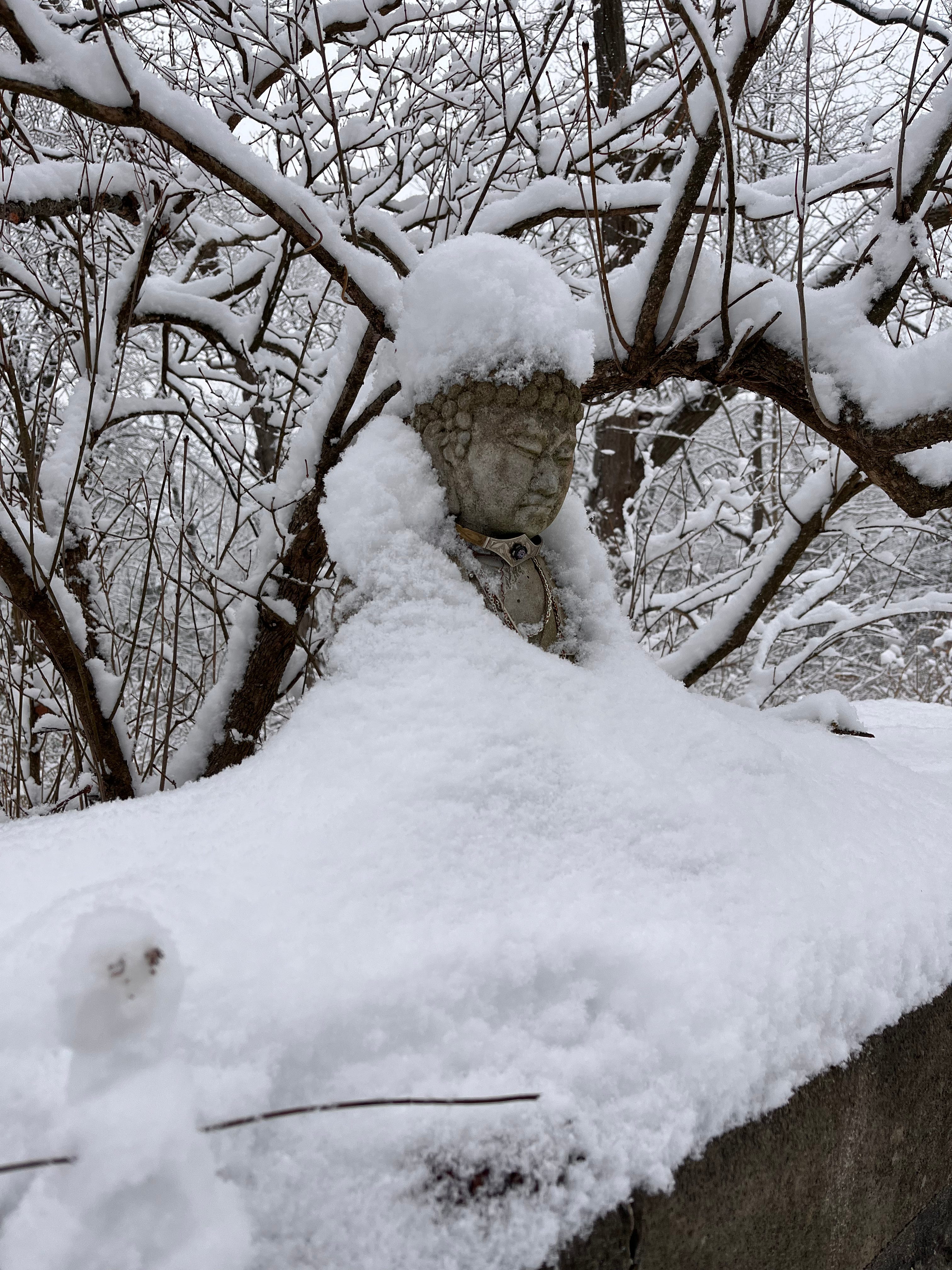
It is joyful to practice together in the midst of this great blizzard. The snow, like the dharma rain, does not pick and choose but falls on everything. How do we practice safeguarding that attitude, allowing our practice to include everything and land everywhere?
May we all guard the teachings with our whole lives.
Koshin.
P.S. Two ways to reinvigorate our practice together.
Daily Meditation with the New York Zen Center sangha in person or online.
Commit to Sit: Becoming Your True Self It is not too late to join our 90-day guided meditation period with daily teachings, weekly dharma talks, and community practice. We’ll work with Shunryu Suzuki Roshi’s teachings on becoming yourself.
Your words really spoke to me. Especially this:
"How do we not lose our humanity? How do we not demonize others and realize how we are all responsible? How do we see this terrible brutality and not split the world in two? Into us and them?
To the man who was killed and to the people who killed him, who are they? What leads someone to do that? How do we safeguard the teachings throughout our life with rigorous care and protection?
To me, safeguarding the tradition means making sure that even in these terrible moments, we’re not losing compassion, wisdom, love, and connection."
I teach secular mindfulness and becoming a town councilor really tested what it means to be mindful in the middle of conflict, trauma, competing needs, and limited resources as a small town. Politics became my teacher. I realized despite seeming differences we often had the same underlying needs and values, just our lived experiences were different. Coming to the present moment, we're seeing different movies as Van Jones puts it. We're being fed different narratives and millions go into creating the political divide.
To be able to see through this illusion, practice is so important and the guidance of wise teachers. Thank you for your teachings _/\_
I'm full of contradictions. Even watching my own reaction to this death specifically. Excruciating to watch, yes, but a nurse?! I'm a nurse! Extra outrage, and maybe now it's getting personal. What if he were an unemployed man living with his mom and playing video games all day? Is there an outrage downgrade?
What helps me align is to ask myself questions and to try and be vulnerable enough to be truly honest about myself. And really specific. You asked last week about giving without recognition. For all my kvetching about my crumbling, painful body, I somehow motivate myself to prepare food for 3 feral colony cats that live around the corner and go out at like 10pm in 10 degree weather and sit there until they finish so I can clean up after them. They never say thank you, BTW. Literal eat and run. I have thought, many times, "now translate this effort and attitude to humans" (like a mantra even). Or pin it as a reference for when I find myself wanting to make excuses in other areas of life. And quickly, to add, I read here for a while before ever commenting, and the story was that I know nothing about Zen practice so don't crash this party because I don't know the rules, the lingo, the proper way to address, worried how I would be/am viewed. I say this out loud because maybe there are other readers who want to share something but feel exactly like I do...